







Rob Moll
We Are Family
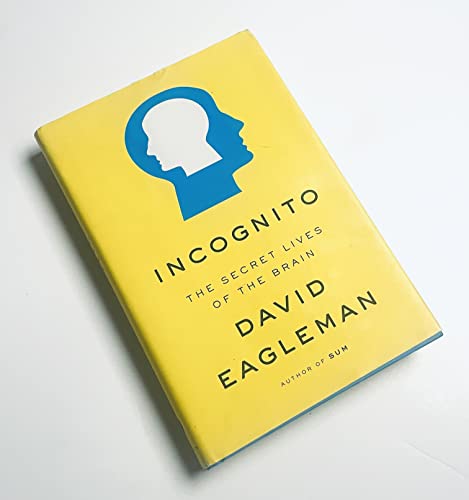
The brain is host to competing interests."About one-third of the human brain is devoted to vision," writes neuroscientist David Eagleman in his bestselling book on the brain Incognito: The Secret Lives of the Brain. So when a blind person stops receiving visual input from their eyes, their brain-power can be reprogrammed to receive it in another way.
Visual-tactile substitution glasses can take the visual input from a camera and translate it into vibrations on a pad on the person's back. After about a week, blind users of the device "become quite good at navigating a new environment." They actually begin to perceive the pressure on their backs as sight: "The apparatus reminds us that we see not with our eyes but rather with our brains."
In Eagleman's telling, there is no conscious learning how visual-tactile substitution works. There is no memorizing certain patterns that equate to visual descriptions of the environment. Instead, the brain simply figures it out. In his book Strangers to Ourselves, Timothy Wilson writes that our brain processes as much as 11 million pieces of information per second, while only 40 bits enter consciousness.
If we think of ourselves only in terms of what enters our consciousness—even if that is the most important—then we fail to understand much of who we are. As the head of Baylor's Laboratory for Perception and Action, Eagleman is at the forefront of efforts to revise our understanding of human nature. For the last 20 years, technological advances have allowed scientists to be able to watch the brain at work. We've seen that many of the functions we ascribe to our core selves are dependent upon brain functions. We're realizing how dependent our sense of ourselves is on our biology and its interaction with the environment, and we're seeing how enmeshed we are with our friends and family, parents and grandparents, as well as our culture and faith.
We often talk as if we are separable from our bodies. Futurists want to download their thoughts and live forever online. Some faithful Christians look forward to discarding their "shell" of a body in favor of a spiritual life in heaven. But if we could separate our thoughts and memories, even our sense of self, from our bodies, we would discover that the line between me and you isn't so clear. "When we talk about 'the brain' and behavior, this is a shorthand label for something that includes contributions from a much broader sociobiological system," Eagleman writes. "The brain is not so much the seat of the mind as the hub of the mind."
We're not so much immortal souls with joysticks controlling a mass of muscles and bones as we are the dust of the earth enlivened by the breath of God.
A flood of books has been released over the last decade using this new research to explain who scientists have found us to be. The result, as one of these books suggests, is that we are strangers to ourselves. The reigning bestsellers say that for the most part, we're not in charge. "Most of what we call thinking," Eagleman argues, "happens well under the surface of cognitive control." Below the level of awareness, your brain is controlling everything from the level of chemicals in your stomach to shifting your position in your seat because your back is starting to bother you. It's only when something goes wrong that we take some Tums or see a chiropractor.
I would wonder if Eagleman is playing the provocateur, trying to unsettle deeply entrenched misconceptions, except that he is but one of many neurologists questioning whether our consciousness is in charge. Free will is up for grabs among these scientists and writers, who evidently intend to be taken at face value. This is especially true of his persistent belittling of consciousness—which, he tells us, is useful only to set goals and map out strategies: "Consciousness is the long-term planner, the CEO of the company, while most of the day-to-day operations are run by all those parts of her brain to which she has no access." It's an oddly reductive account.
Like any organization, Eagleman goes on to say, the brain is host to competing interests: in fact, our brain is a team of rivals. Part of us wants the chocolate cake; part of us worries about our health; another part checks to see if anyone is looking. Our consciousness can tip the scales in one direction or another, but even then its power is strictly limited. When our consciousness learns a task—reading, multiplying, riding a bike—it transitions the new skill to autopilot. "It rewires its own circuitry until it can accomplish the task with maximum efficiency. The task becomes burned into the machinery." Take the cake too many times, and it becomes automatic. Abstaining becomes far more difficult.
While we can consciously wire our own circuitry, our brains are also designed to pick up certain kinds of information and to shape itself according to it. New York Times columnist David Brooks, in his recent book The Social Animal, explains where much of the data "hardwired" into us comes from:
We inherit a great river of knowledge …. The information that comes from deep in the evolutionary past, we call genetics. The information revealed thousands of years ago, we call religion. The information passed along from hundreds of years ago, we call culture. The information passed along from decades ago, we call family, and the information offered years, months, days, or hours ago, we call education and advice.
We're not blank slates. For example, Eagleman writes that a newborn seems to expect to see faces. "Our preprogramming is deeply involved in social exchange," he says. "The brain, like the heart, doesn't require a particular culture in order to express social behavior—that program comes pre-bundled with the hardware."
If much of who we are is preprogrammed and automatic, or at least not the result of our conscious choices, this has a number of implications for society at large as well for religious people in particular. In a chapter on how we treat criminals, Eagleman argues that, rather than routinely using incarceration to punish socially unacceptable behavior, the actions of people who (we must assume) could hardly help themselves, we should lock criminals up based on their propensity to re-offend. Eagleman provides examples of how brain tumors turned normal people into pedophiles, how a Parkinson's drug turned patients into compulsive gamblers. "A slight change in the balance of brain chemistry can cause large changes in behavior. The behavior of the patient cannot be separated from his biology."
It's not that guilt or blameworthiness don't exist; but there is much less of it than we assume, and it's much harder to assign than we think. "We are not the ones driving the boat of our behavior," Eagleman says, "at least not nearly as much as we believe. Who we are runs well below the surface of our conscious access, and the details reach back in time before our birth."
Our legal system needs to be reformed, Eagleman argues, so that we incarcerate people based on "how a person is likely to behave in the future." He exhibits a higher confidence in the field of neuroscience to make such judgments than I am comfortable with, but the direction of his argument makes sense. While punishment is an important motive, we should also weigh the extent to which a person is likely to commit the crime again. To the extent that neuroscience can tell us a person's likelihood of recidivism and identify treatments that would modify the circuitry that creates an offender (which Eagleman suggests is possible or soon will be), society should make use of it.
Christians can draw out other implications, even if we retain a stranger sense of (conscious) personal responsibility. We are a great deal more than solitary creatures choosing our beliefs and making personal decisions for Christ based upon rational arguments or compelling altar calls. We are shaped by the community we live in, and we make choices within the scope defined by our biology and our environment. This is not to say individuals don't exist. We do, but we are circumscribed.
The lessons of Incognito, The Social Animal, and other popular books drawing on new research on the brain should make us think more highly of the church as the body of Christ, an organism of which we are members. We should think of our spiritual pursuits not as solitary pilgrimages but as an immersion into a wide river. Spiritual disciplines aren't just enforced time with God, they're rewiring the circuitry of our brains, forming and shaping disciples. The findings of Eagleman and other researchers call into question evangelicals' emphasis on a correct worldview as the defining trait of a faithful Christian. How we cognitively rationalize our beliefs is of smaller consequence; those beliefs are shaped more than we think by our passions and desires, our behaviors and habits, which are in turn formed by our families and cultures, genes and neural pathways.
The lesson is not that we cannot help being who we are. The lesson of recent neuroscience is that who we are is much more than what we think. We are not separable from our bodies. The disciple swims in a river pushed by the saints of earlier eras, the biology of our families, and the culture they developed. We swim between banks, pulled by the habits we form, the disciplines we enact, the community we inhabit.
This view of humanity has little in common with the Enlightenment conception of man, the Romantic's isolated individual, or the evangelist's decision-maker who at a specific moment chooses for Christ. Instead it sounds like the Old Testament's covenant community, formed by the ritual of the law into a chosen people, and through whom salvation comes to the world.
Rob Moll is author of The Art of Dying: Living Fully into the Life to Come (IVP), and is working on a book on how we are physically designed to love God and love people.
Copyright © 2011 by the author or Christianity Today/Books & Culture magazine.
Click here for reprint information on Books & Culture.
 Email Newsletter
Displaying 1–1 of 1 comments
See all comments
Matthew Colflesh
Some of these observations connect with James K.A. Smith's ideas about humans as liturgical animals, formed in large part almost at the cellular level by rituals we practice. See "Desiring the Kingdom".
*